
Baobab
Adansonia Digitata
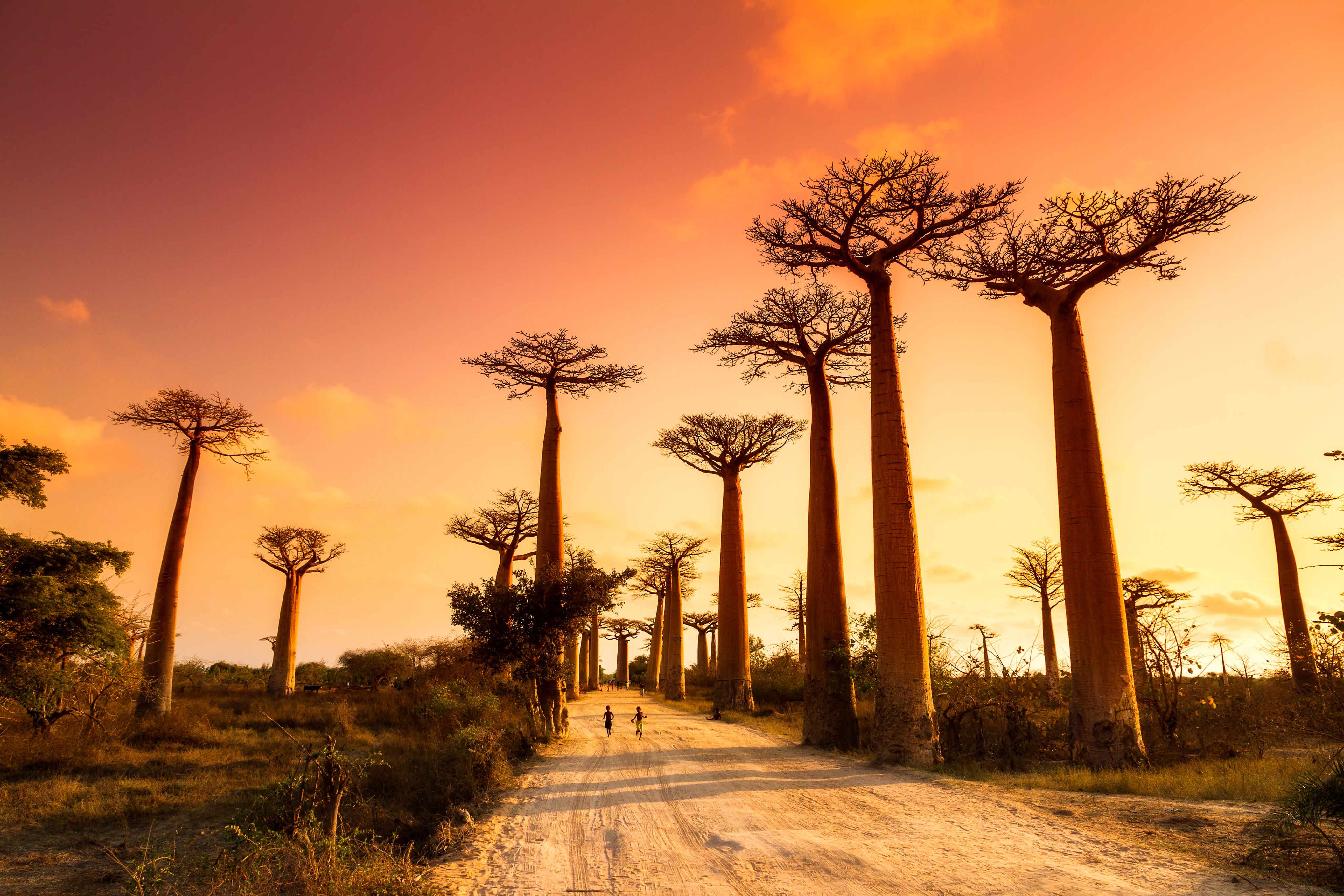

Baobab in African economy
The fruit of the Baobab is an African superfruit. It has many nutritional benefits similar to those of the Chinese Ginkgo Balboa, the South American Maca, and the Indian Aswaghanda.
Trade in Baobab products provides an income for local communities, and continues to hold immense potential as a source of wealth.
Currently not known as well as its counterparts, and therefore not generating the same source of wealth, African countries exporting them would no doubt benefit greatly and sustainably from its yields.
Raising awareness about the trade and profit potential of Baobab products ultimately serves to protect the woodlands, as communities then have economic incentive to preserve the trees instead of cutting them down for fuel and for farming space.
UK based Natural Resources Institue estimates that a new trade agreement of baobab pulp would be worth up to $1 billion a year for African producers, and securing jobs for 2.5 million households across the 30 baobab producing countries in Africa.
This would mean an economy that has thus far been largely dependent on external aid and systems of would stand robustly and independently.

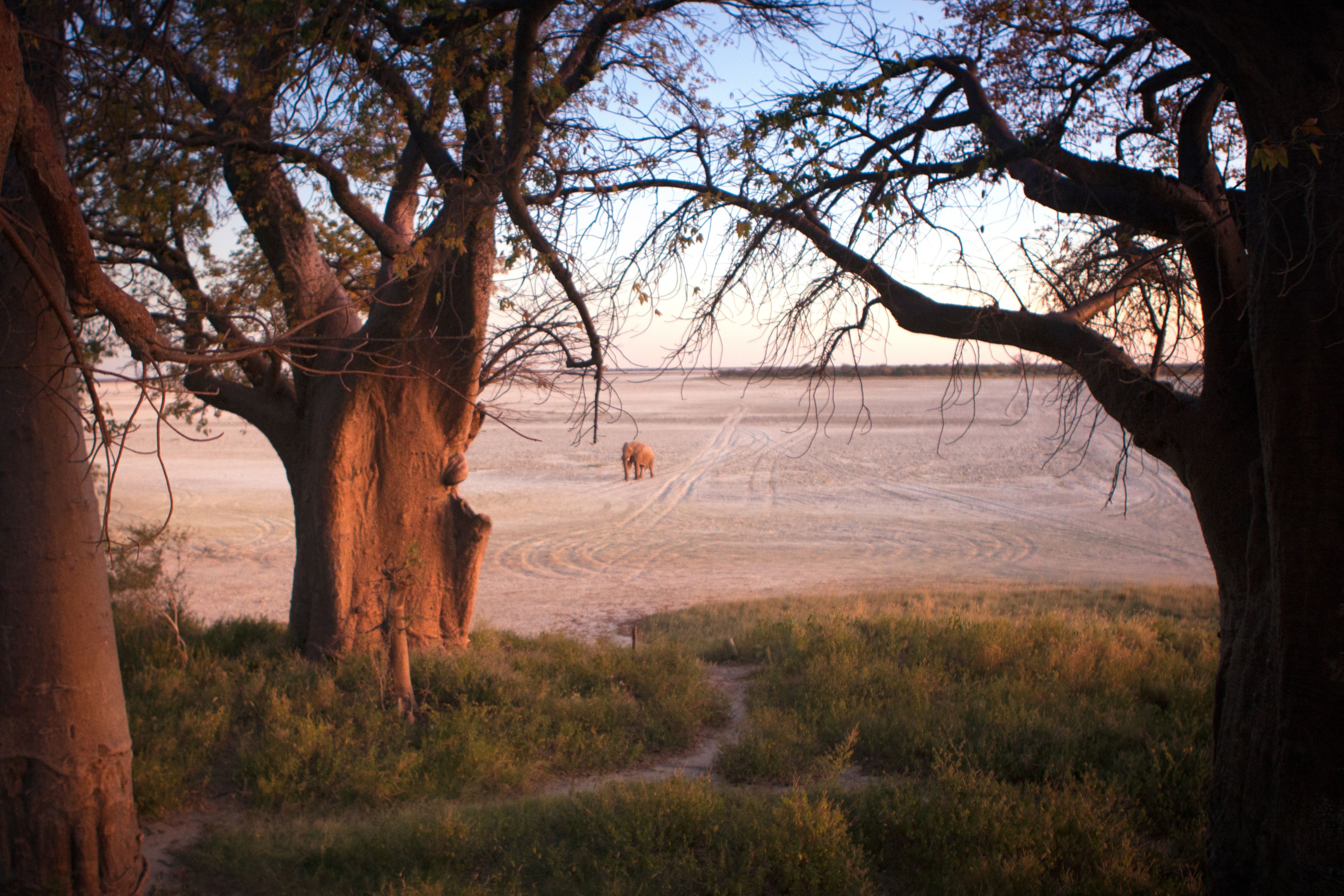
Baobab in African society
Baobab trees play a big part in the cultural life of their communities, as well as centering many African oral stories.
Many people imagine the spirits of their ancestors to inhabit the Baobab, and the tree often plays a central role in ceremonial rituals and sacrifices.
The Baobab is also famous as a banyan tree, serving to be a societal meeting spot where locals meet to chat and discuss their society.

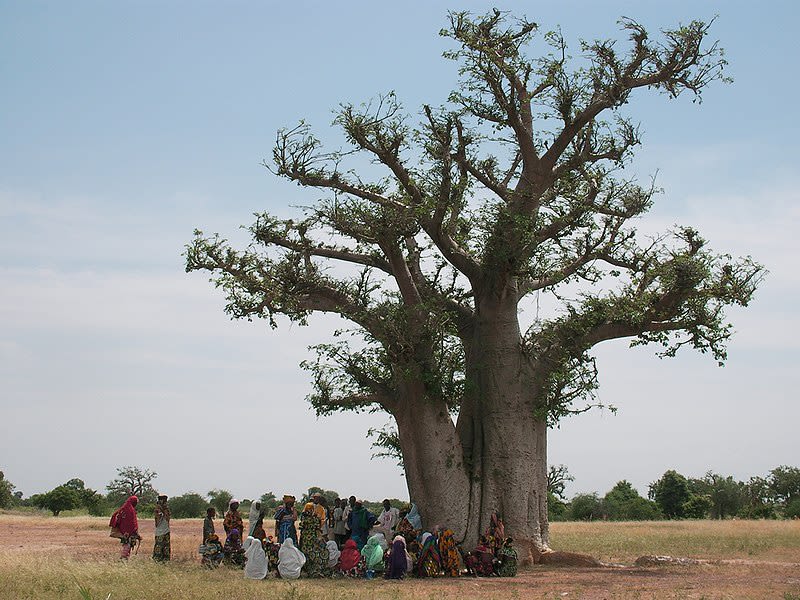
Community meeting under a Baobab tree
Community meeting under a Baobab tree

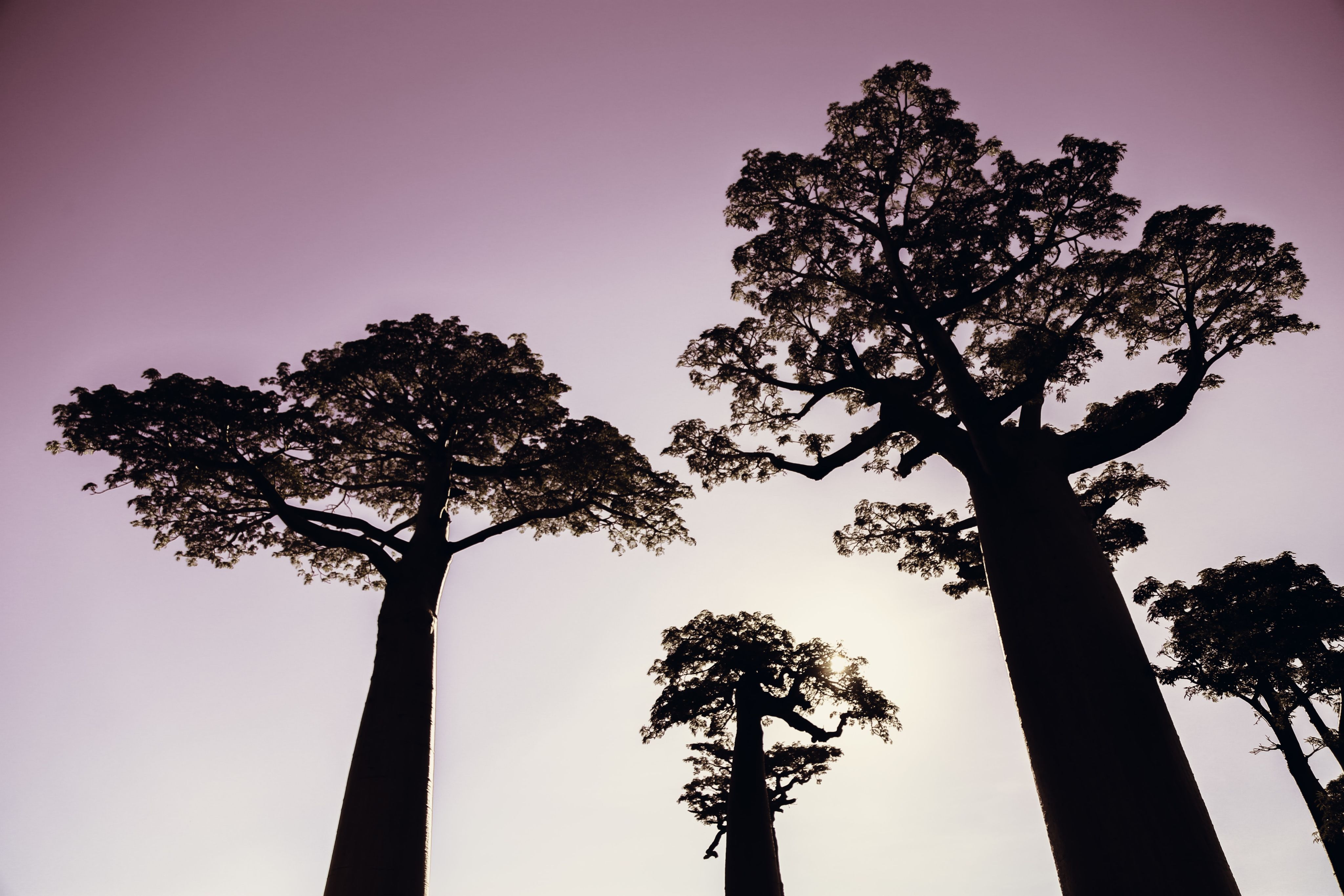
Locating Baobab

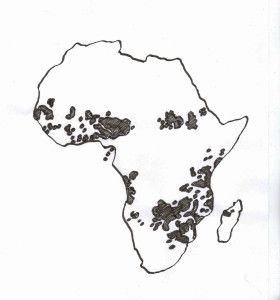
Baobabs are found across 31 African countries.
Angola Benin Botswana Burkina Faso Cameroon Chad Congo Eritrea Ethiopia Gambia Ghana Kenya Madagascar Malawi Mali Mozambique Namibia Niger Nigeria Senegal Somalia South Africa Sudan Tanzania Togo Zambia Zimbabwe
meet the baobabs
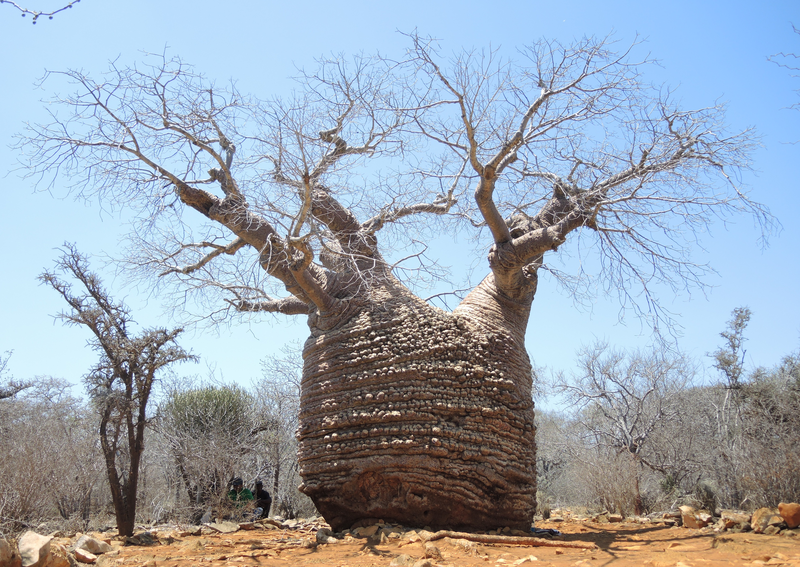
Grandmother's Baobab
in Madagascar
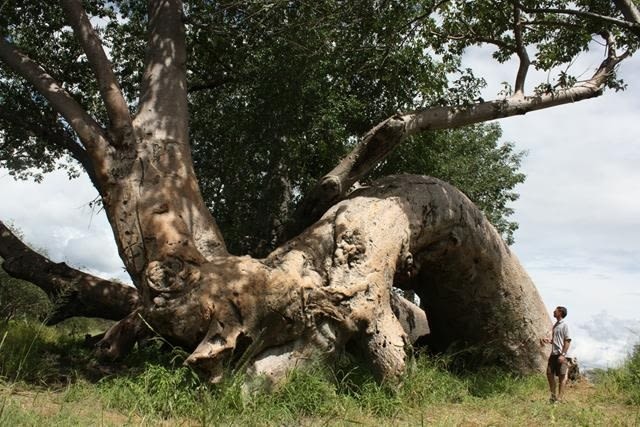
Dorsland Baobab
in Namibia
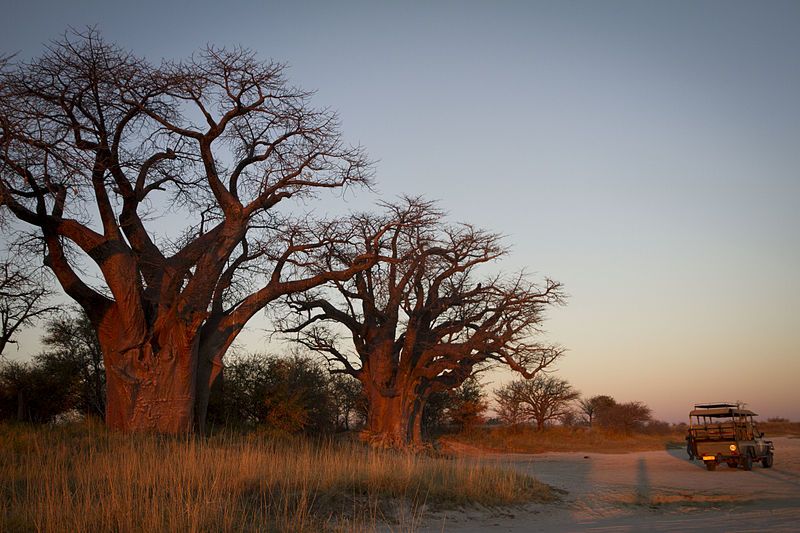
Baine's Baobab
in Botswana
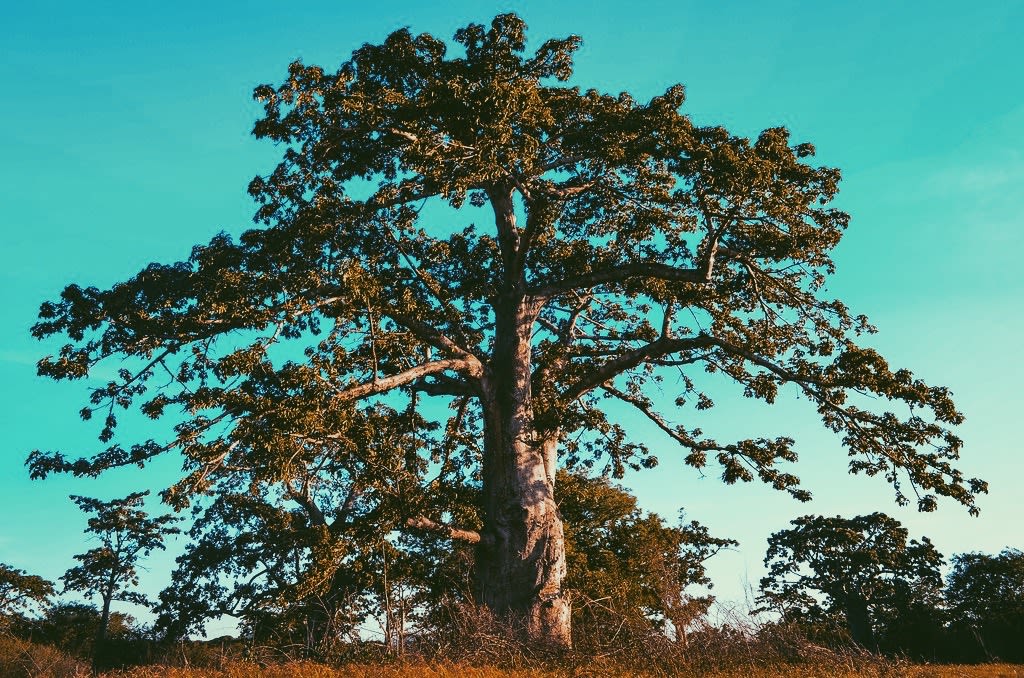
Kixingi Baobab
savannah near Luanda, Angola
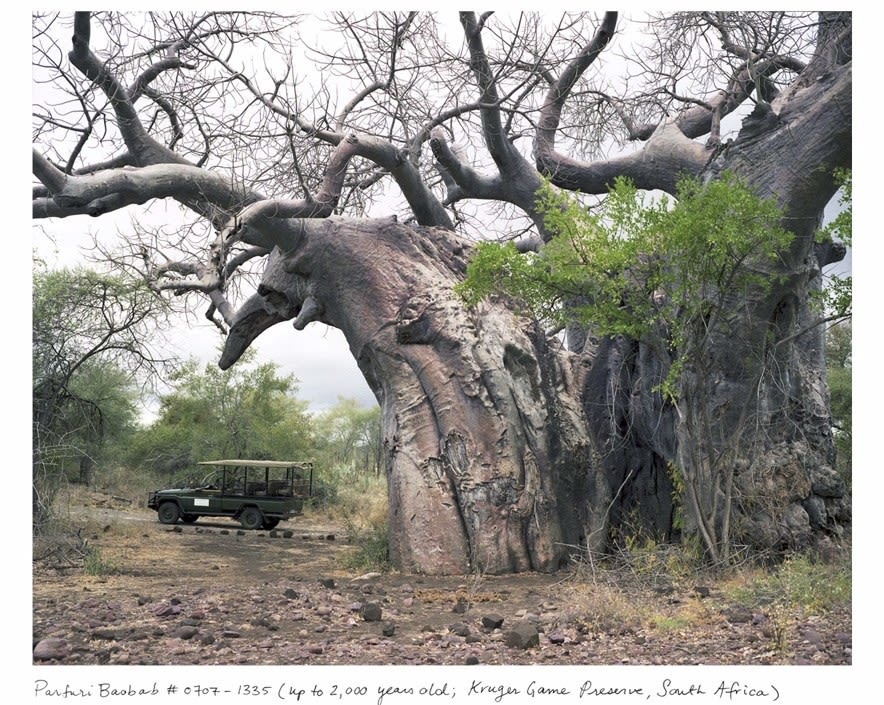
Parfuri Baobab
in Kruger National Park
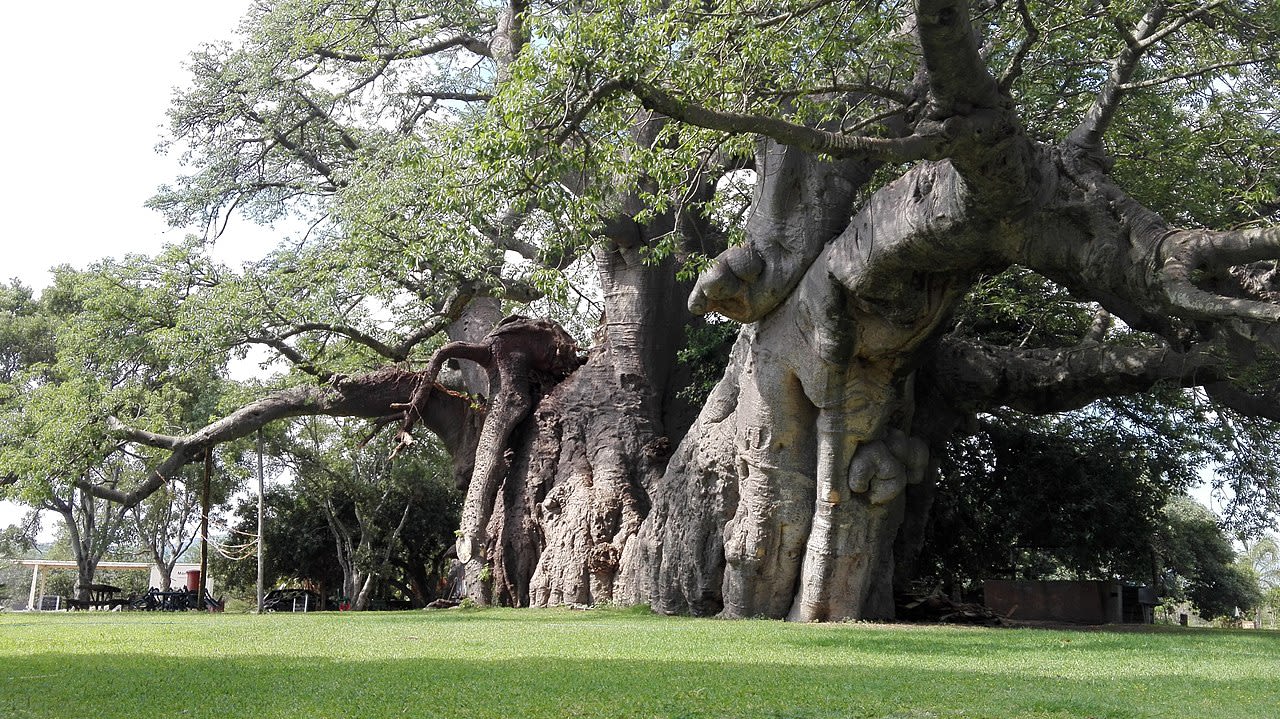
Sunland Baobab
in Kruger National Park
empowering communities
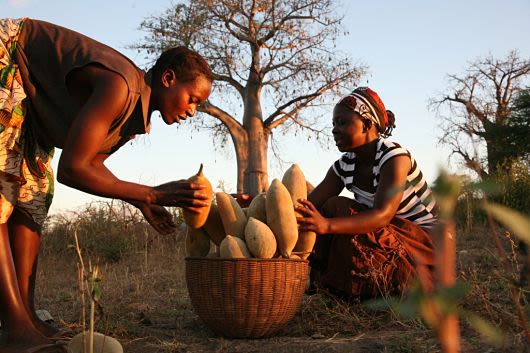
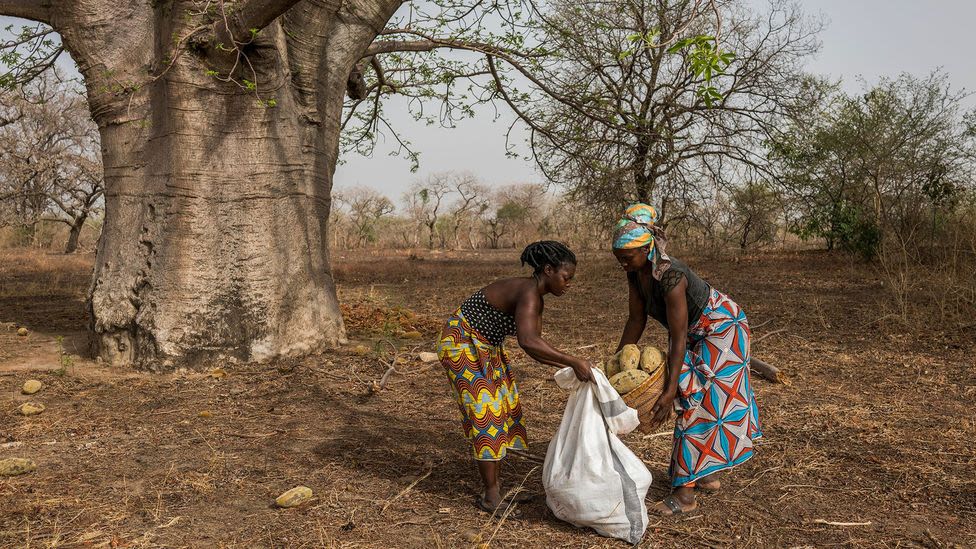
In local communities, it is women who take care of the trees and collect their fruits. One of the power of the baobab fruit’s potential lies in the simplicity of harvesting skills required and being readily accessible.
Baobabs grow naturally and in abundance near many rural households. They are ideal trade products for villagers, as the fruit is light to transport, and easily and naturally dried on the branch.
Currently, much fruit goes to waste due to current lack of knowledge of and demand for demand for the Baobab fruit.
An influx of Baobab demand would support rural communities by creating jobs, empowering women both economically and artisanally. Making products from Baobab give local women a sense of vocation and creation, as well as adding wealth to the area in a sustainable way, without interference of large corporations which often cause a stilted economy that is dependent on external aid rather than fostering an internal system of dependable growth.


BAOBAB as a superfruit
Whispers of Baobab as a superfruit are spreading through the European food niches, but it is hardly new for indigenous peoples.
The Baobab tree has been highly regarded by African people for centuries, as different parts of the tree can be used in many different ways with more than 300 known usages.
The fruit of the Baobab has many nutritional benefits similar to those of the Chinese Ginkgo Balboa, the South American Maca, and the Indian Aswaghanda, Acai or Chia. Currently not as well known as its counterparts, the Baobab has thus far not generated the same wealth for the African countries exporting them, who are still largely dependent economically and would benefit greatly from its yields.
More recently, the Western world has begun catching up and hailed baobab fruit as the ultimate superfruit, thanks to its high levels of calcium, iron, potassium, and vitamin C.
The fruit's pulp has almost ten times the amount of vitamin C as the equivalent serving of fresh oranges. It has 50 percent more calcium than spinach and is recommended for skin elasticity, weight loss, and improved cardiovascular health.
Baobab is also more bioavailable than manufactured vitamin supplements, meaning our bodies can absorb the nutrients more easily, ensuring a greater uptake of vitamins.

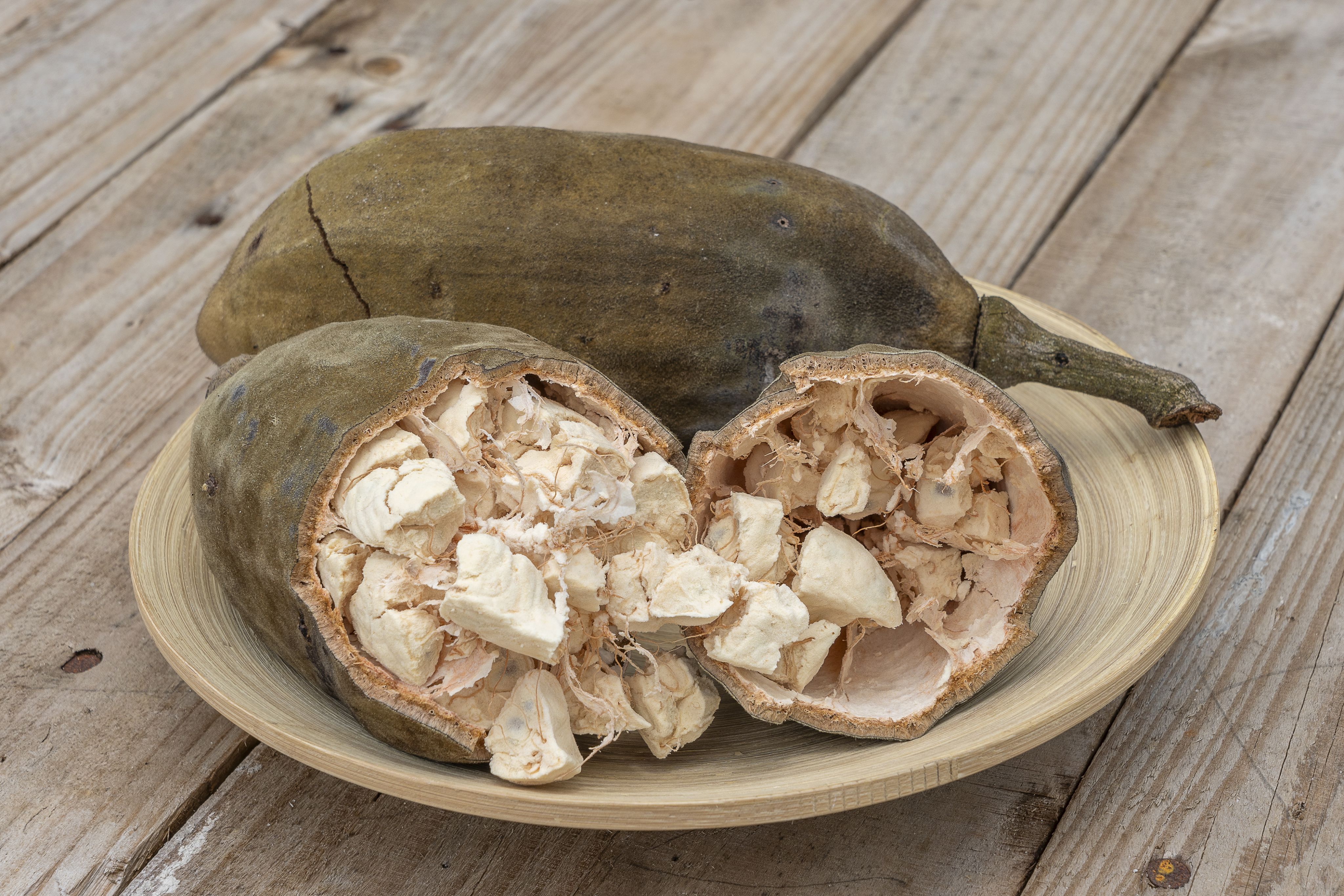

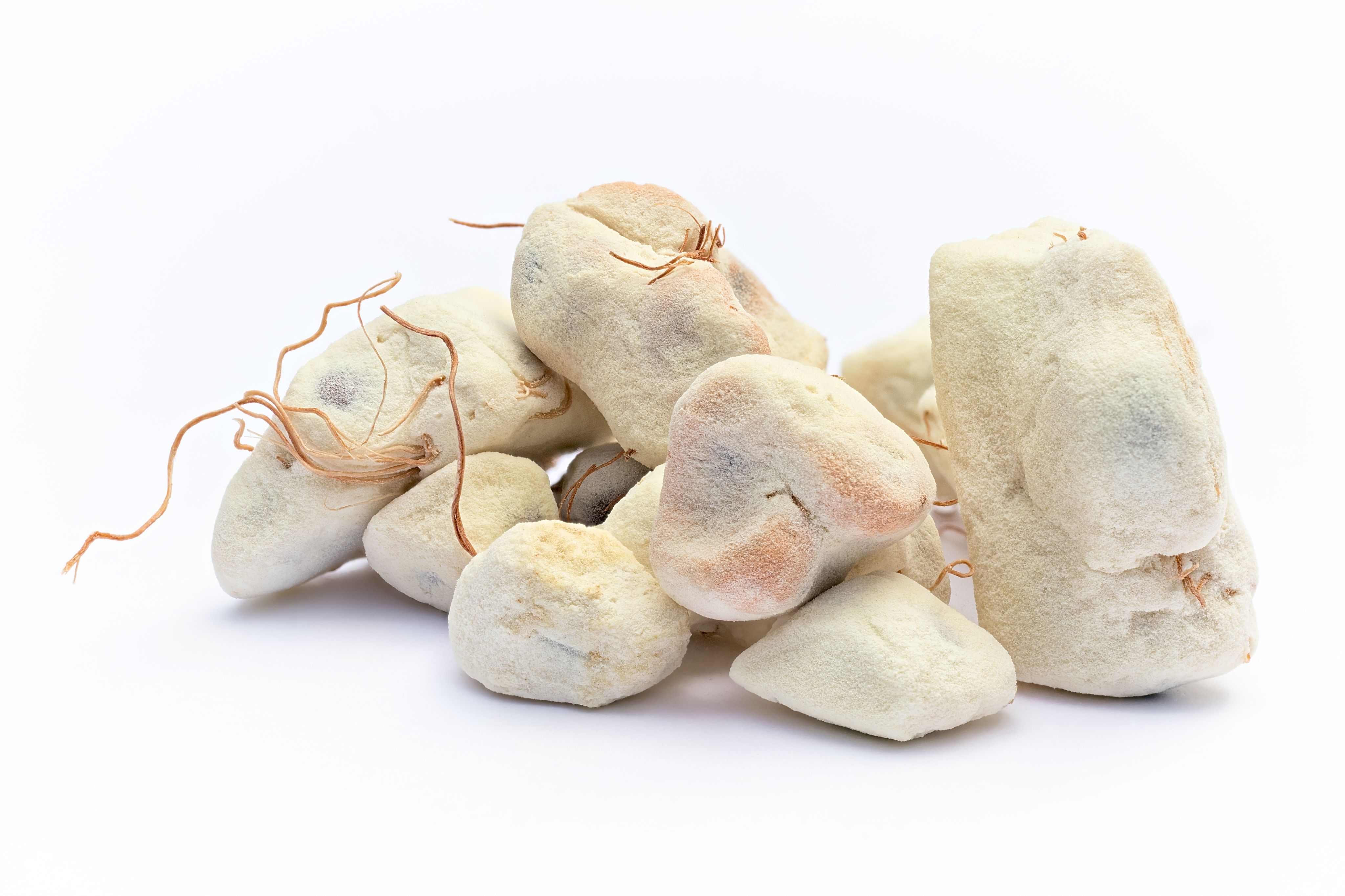
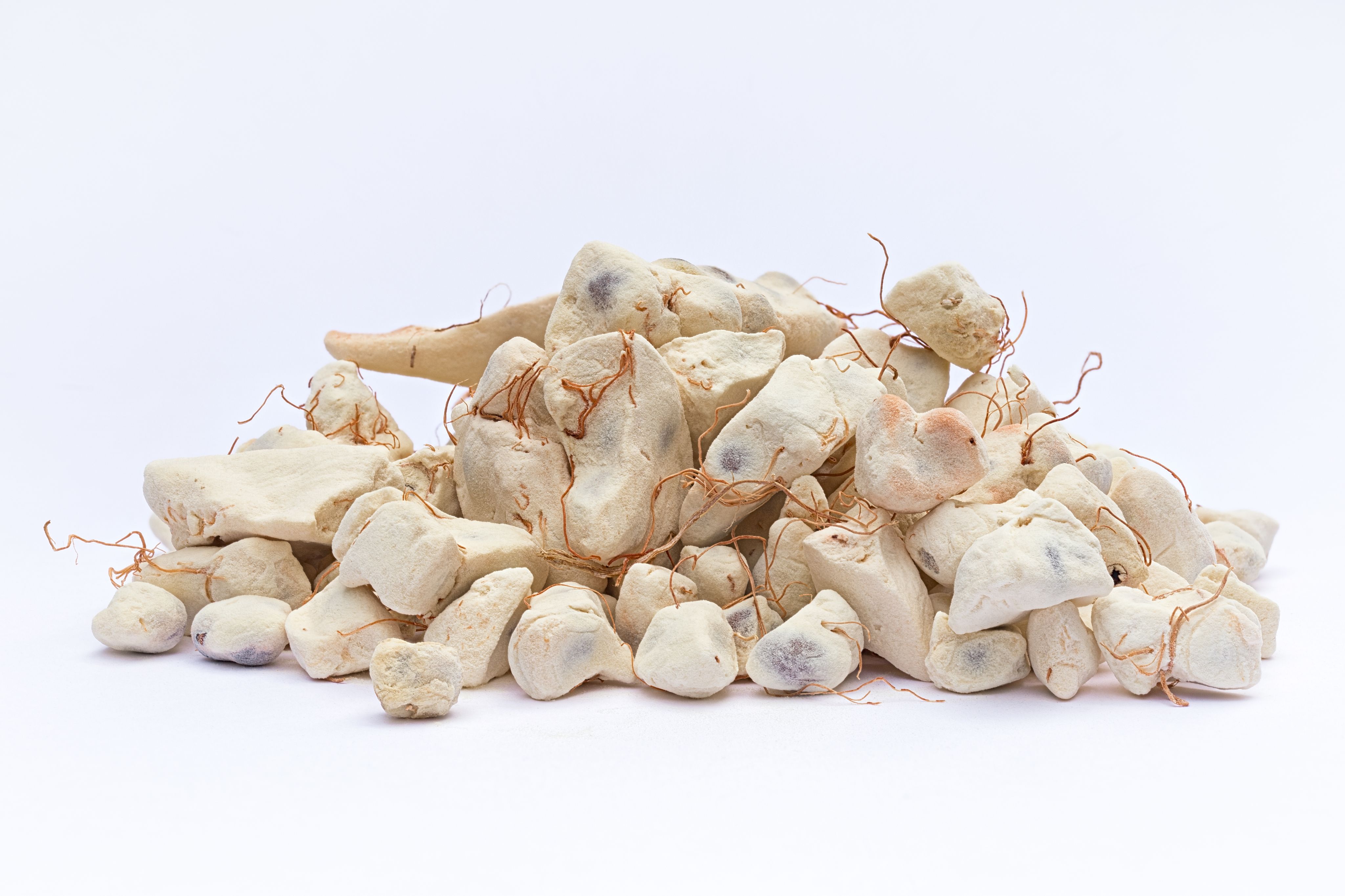
The Baobab tree has been highly regarded by African people for centuries, as different parts of the tree can be used in many different ways with more than 300 known usages, rightly earning its name as the Tree of Life. From its crown, to its roots; from its fruits to the fruit seeds, its flowers, leaves and bark and trunk, the tree is sacred and beneficial for both animals and humans alike.
CROWN
Baobab crowns provide shade, making them an idea place for a market in many rural villages
LEAVES
The leaves are rich in iron and can be boiled and eaten as a vegetable like spinach.
Fresh baobab leaves are used medicinally to treat kidney and bladder disease, asthma, insect bites, and several other maladies
BARK
Fiber from the bark is used to make rope, baskets, cloth, musical instrument strings, and waterproof hats.
People also use the fibers of the bark to make cloth, baskets, mats and ropes.
WOOD
The spongy wood can be macerated into rope or paper
ROOTS
The roots can be used to make red dye, and the bark to make ropes and baskets.
Some baobab species are sources of fiber, dye, and fuel.
The trees are not only beneficial for humans; they are key elements in maintaining the ecosystem in the the dry African savannah. They keep soil conditions humid, favour nutrient cycling and avoid soil erosion. They provide shelter, food and water for a plathora of animals.
The Baobab tree is highly resilient
thriving in the most arid landscapes,
regenerating its bark within weeks
without damage to the tree.
a section like, purposeful cutting down of trees due to lack of knowledge, protecting the existing trees and communuties, and planting more trees in the area...

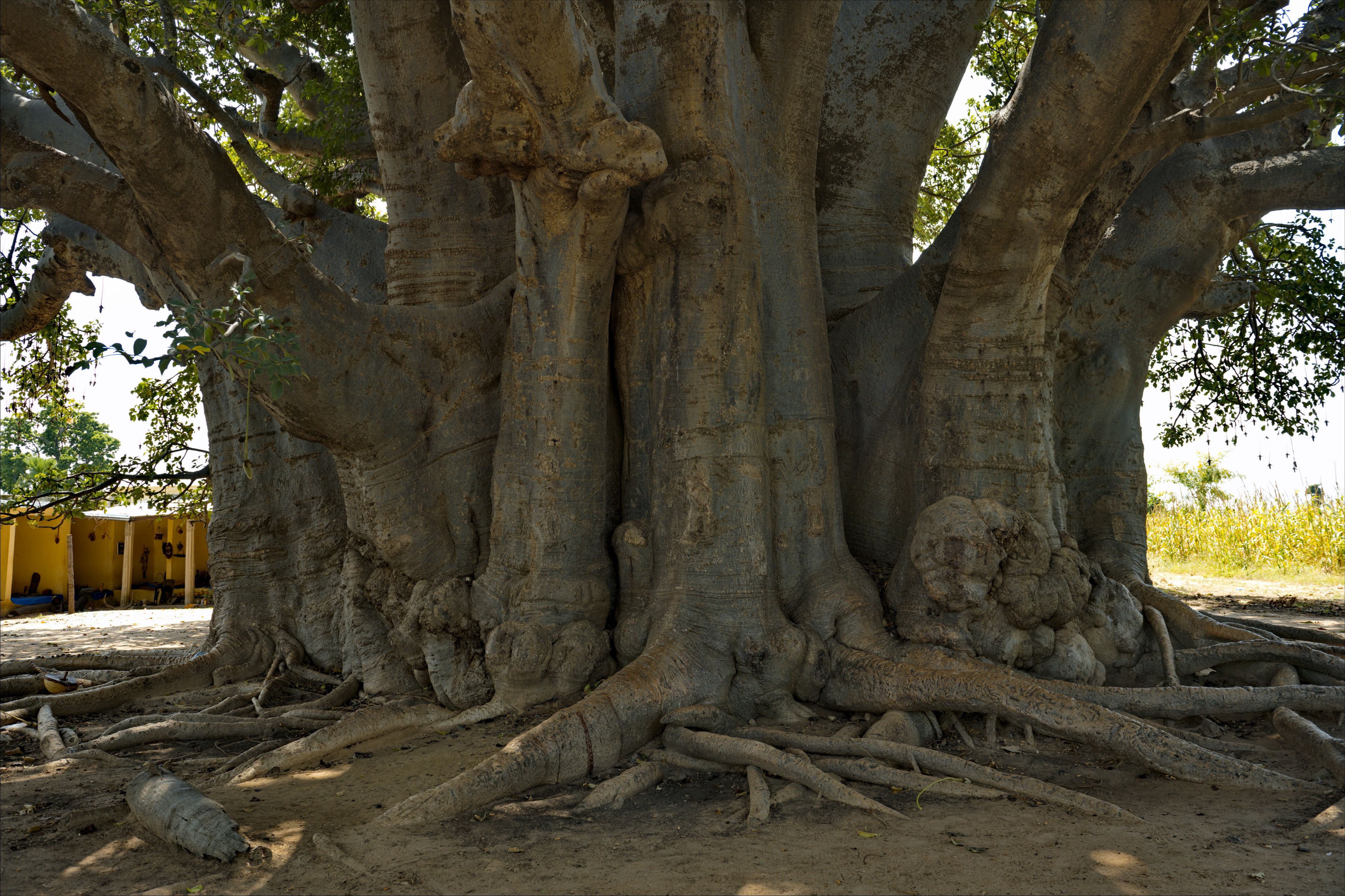
Planetary Emergency

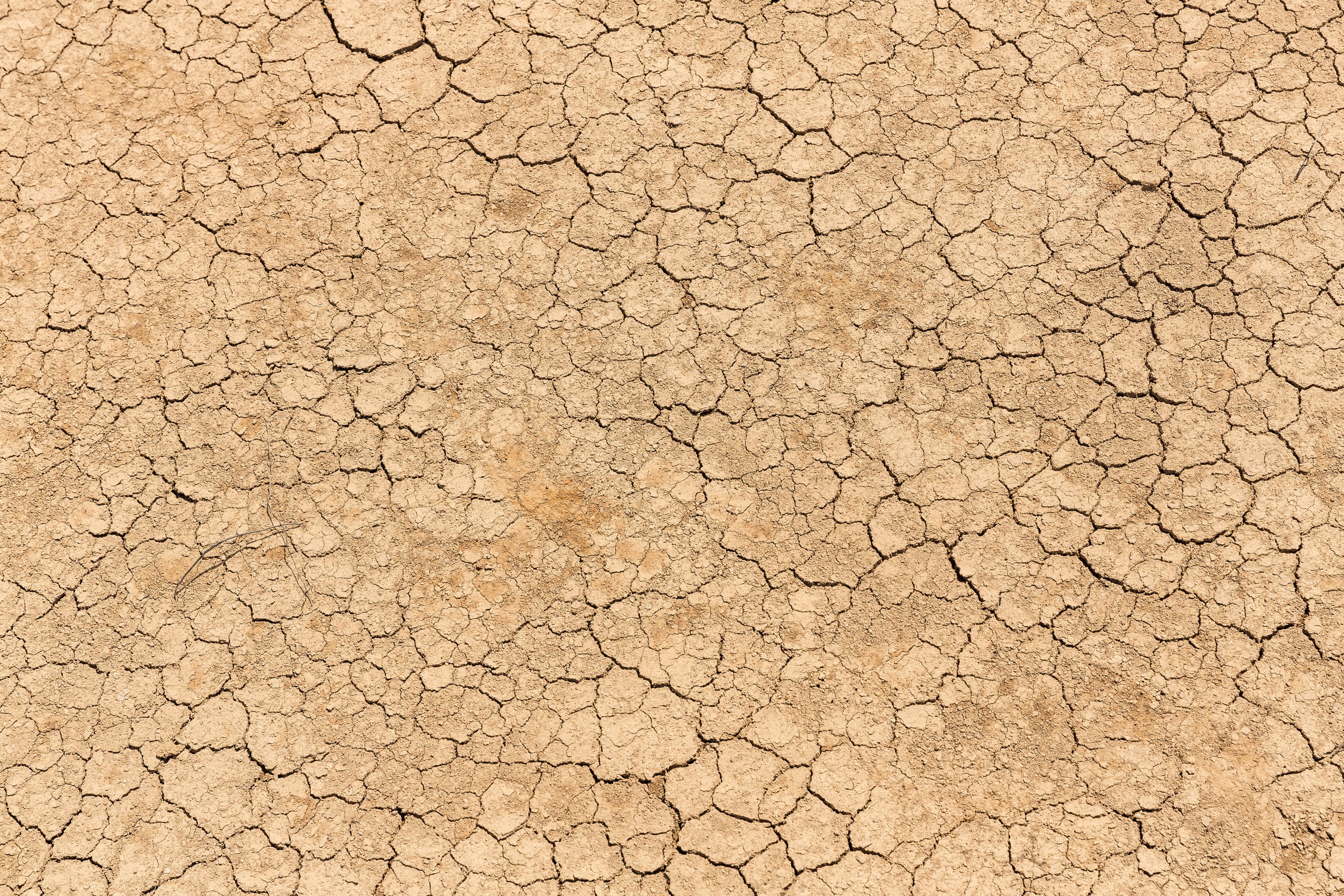
"Kids, beware of the Baobabs!"
‘The dangers of Baobabs are so little known and the risks are so considerable, I say children, beware of Baobabs.’ warns Antoine de Saint Expuery in The Little Prince. ‘Sometimes, you just have to put things off for later. But when it comes to Baobabs, the result is always disaster.'
Unlike in The Little Prince, Baobabs are not seeds that will lead the world to disaster, on the contrary, seeds that will protect our world from it. And as warned, in the case of the Baobab, we really cannot stand to waste time.

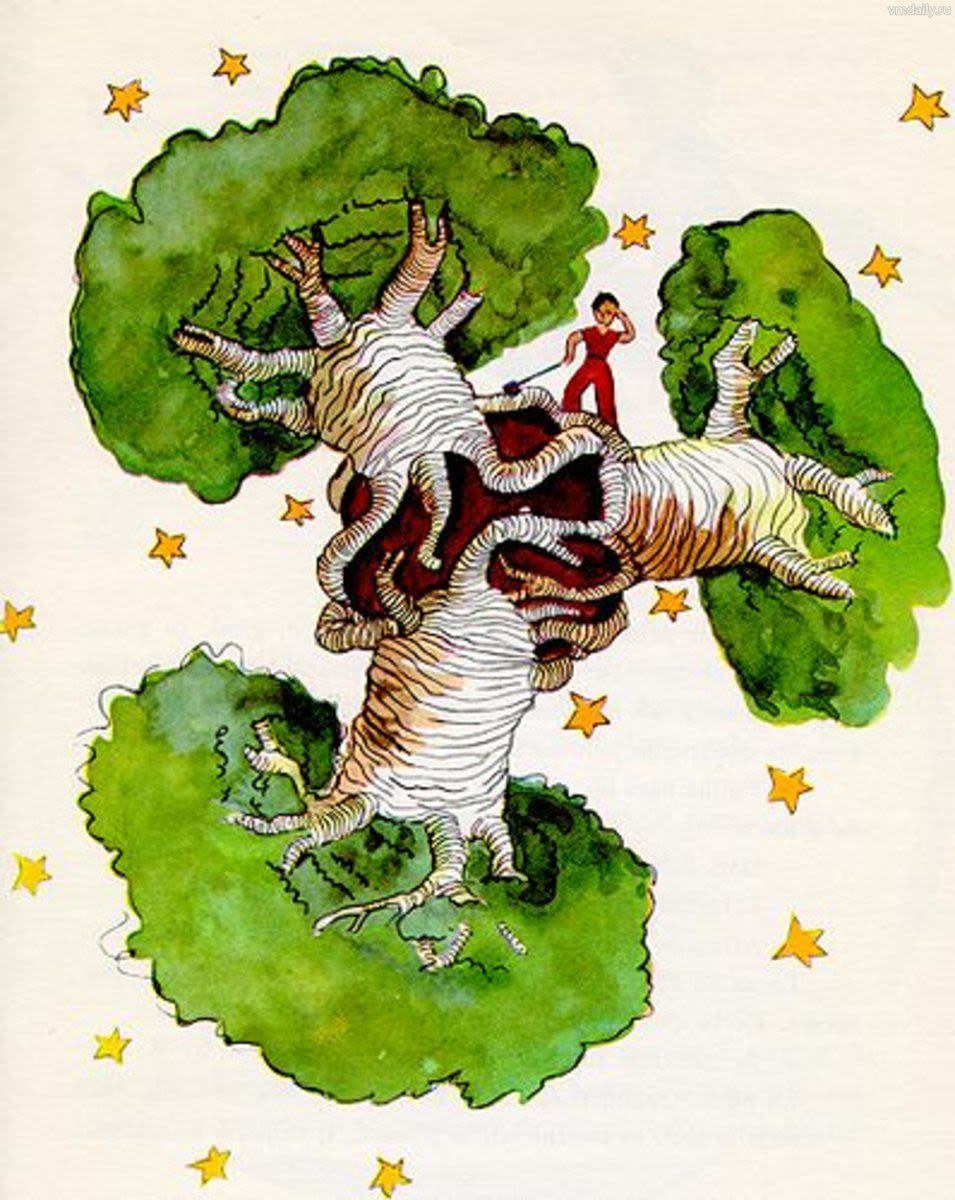
The sustenance of Baobab trees has a huge ecological impact on the world in combating climate crisis.
Trees in the tropics play a much stronger role in maintaining the ecosystem than forests located elsewhere. In the middle of the equator, the sun is fiercely hot and carbon photosynthesis occurs at a rate that is simply not possible at higher latitudes. Accordingly, in this region, trees grow incredibly fast and absorb carbon perhaps ten times faster than trees in the north. One of the most important steps as global response that can be implemented to the planetary emergency regarding climate change is to protect the existing trees and increase forestation in these regions.
Video Excerpt: 03.51 Trees Are The Key
Ru Hartwell, Forest expert Community Carbon Link


But preserving the baobab is not just a biological, ecological or economic issue, it is also spiritual. Local communities highly respect these giant trees, and the trees are protected by healers.
mythology
In African myths, the Baobab has been described as the Upside Down Tree, The Tree of Life and the Mother of the Forest.
Known as the “Tree of Life” throughout most of Africa, the trees live up to their name as their survival skills and adaptation to their environment is remarkable.
Baobabs are wholly self-reliant and rather invincible. While stripping the bark from the lower trunk of most trees usually leads to their death, baobabs not only survive this common practice, but they regenerate new bark.
According to one legend, these beautiful trees were uprooted by God and planted upside down with their roots in place of their branches, in order to punish them for their vanity.
‘If the God Thora threw this tree over the walls of the garden of paradise, then he gave to the wilderness one of its best assets. North of the Tropic of Capricorn, throughout Southern Africa, the Baobab is the undisputed monarch of all trees and plants."
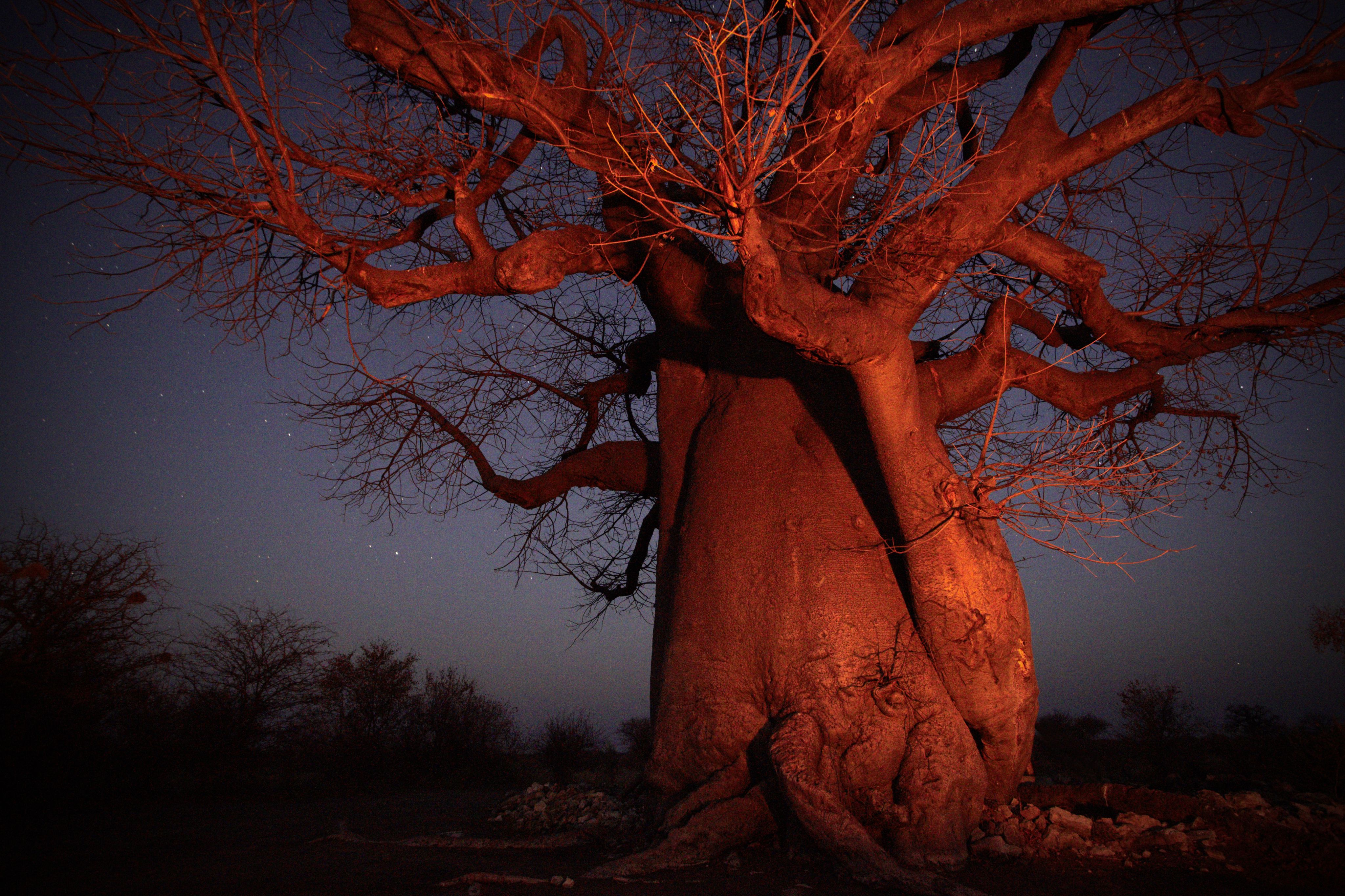
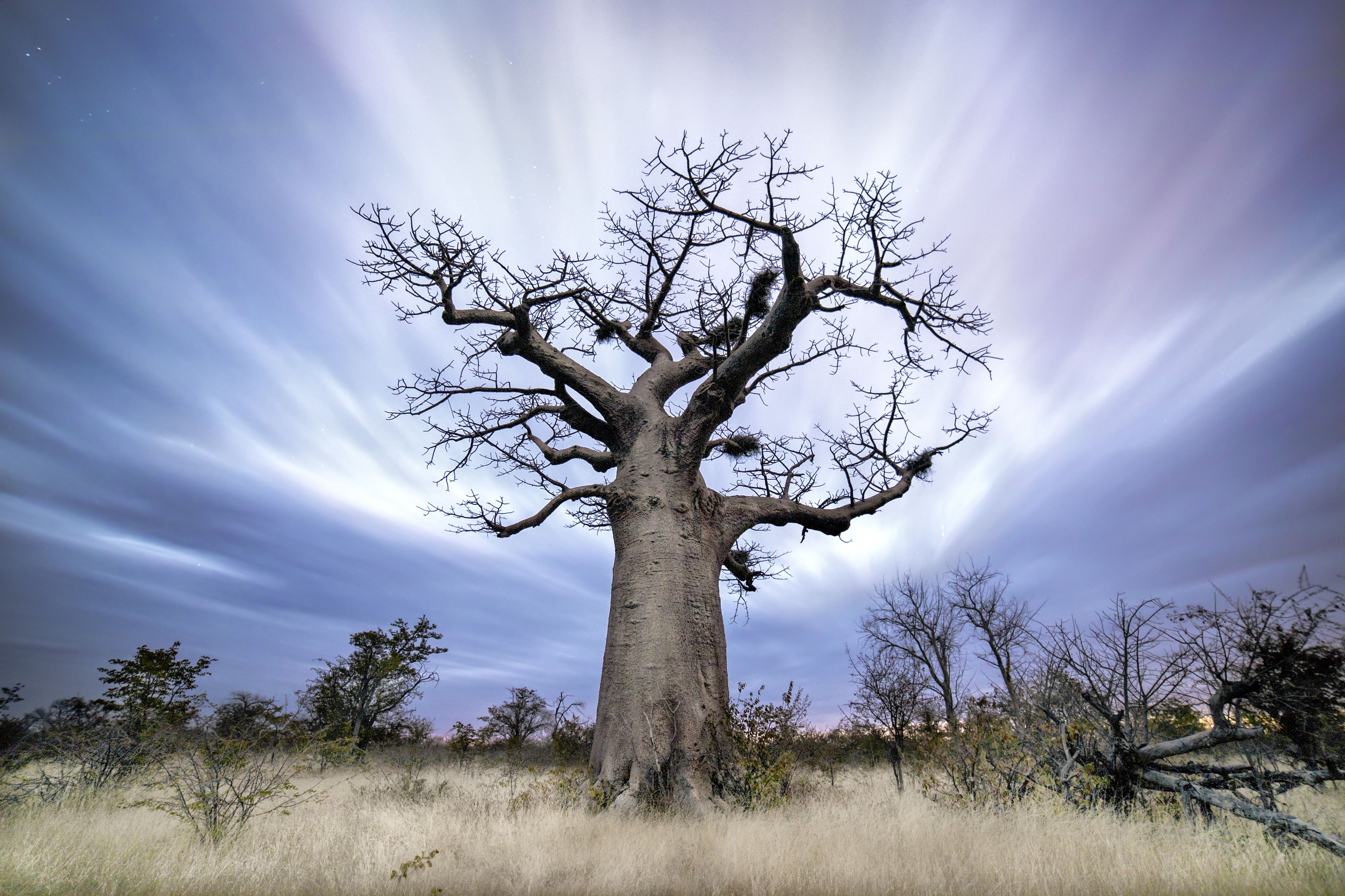
Wherever it grows, it limelights its surroundings, not only by bulk, but also by the appearance of its uniquely shaped branches. They do indeed look like the roots of an upside down tree in the sky; while deep underground there is another tangle of what would seem to have been the original branches.
Among the many myths, it is believed that gazing at a Baobab tree invokes an ancient feeling; perhaps bringing back memories of past or ancestral lives.

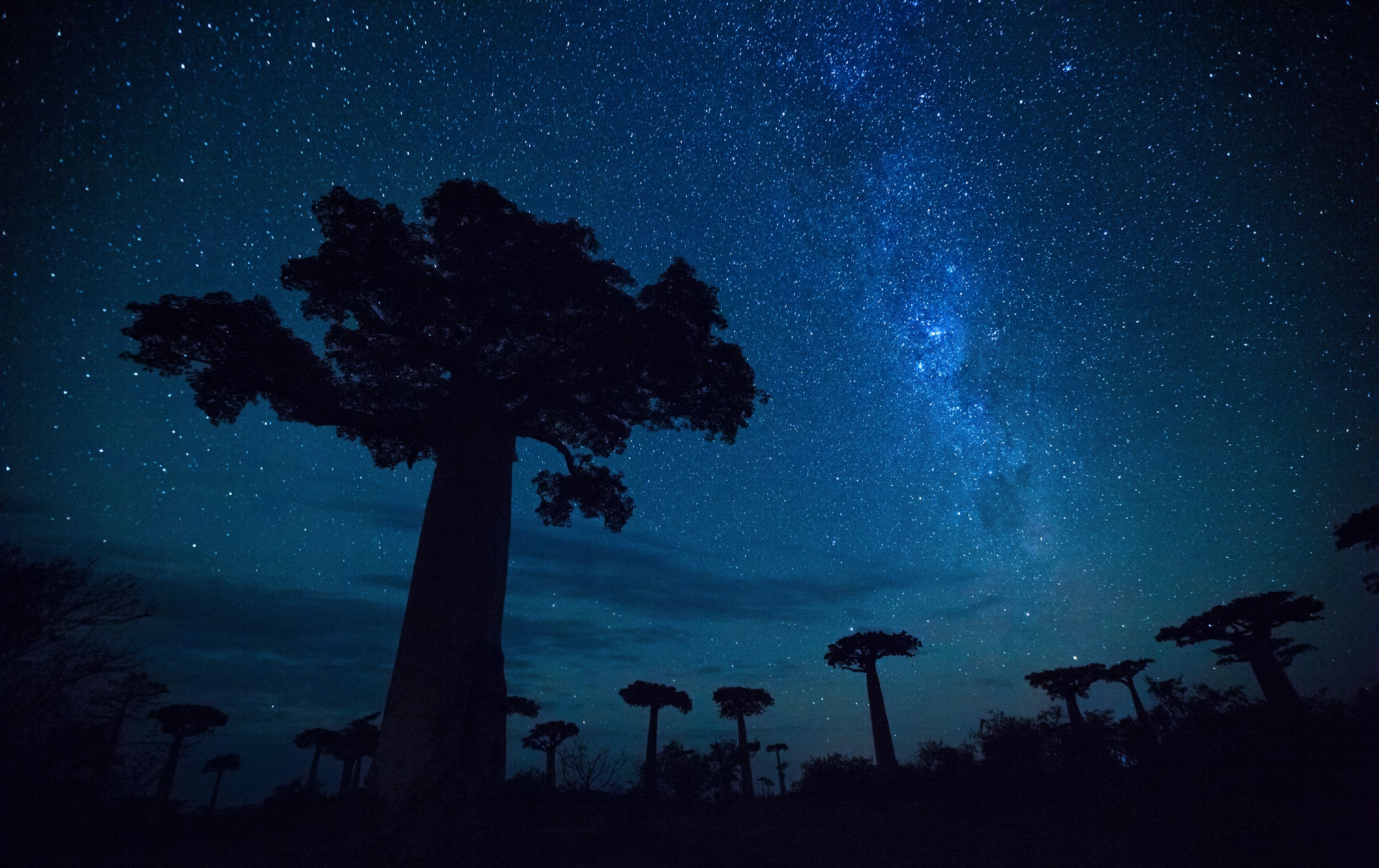
spiritual symbolism
The Baobab is marked with strong spiritual symbolism and is thought to bear a potent metaphoric link to our deeper psyches.
With its longevity, sheer presence and resilience, the Baobab invokes a deep sense of spiritual connection with the world and within ourselves. The resemblance of its roots and branches calls upon an integration between conscious and unconscious dynamics, and it’s complicated root and branch system can be seen as a visual embodiment of the Hermetic philosophy ‘as above so below’, that there is a correspondence between the phenomena of different planes of life.
Through the archetype of an inverted tree, the Baobab symbolizes integration of heaven and earth, bringing to accord the ethereal and the earthly realms.

Baobab Amoureux
Loving Baobabs
More than preserving, protecting, and planting, Baobabs present us an invitation to love. Their profound resilience, sheer presence and kindly touch speaks in volume.
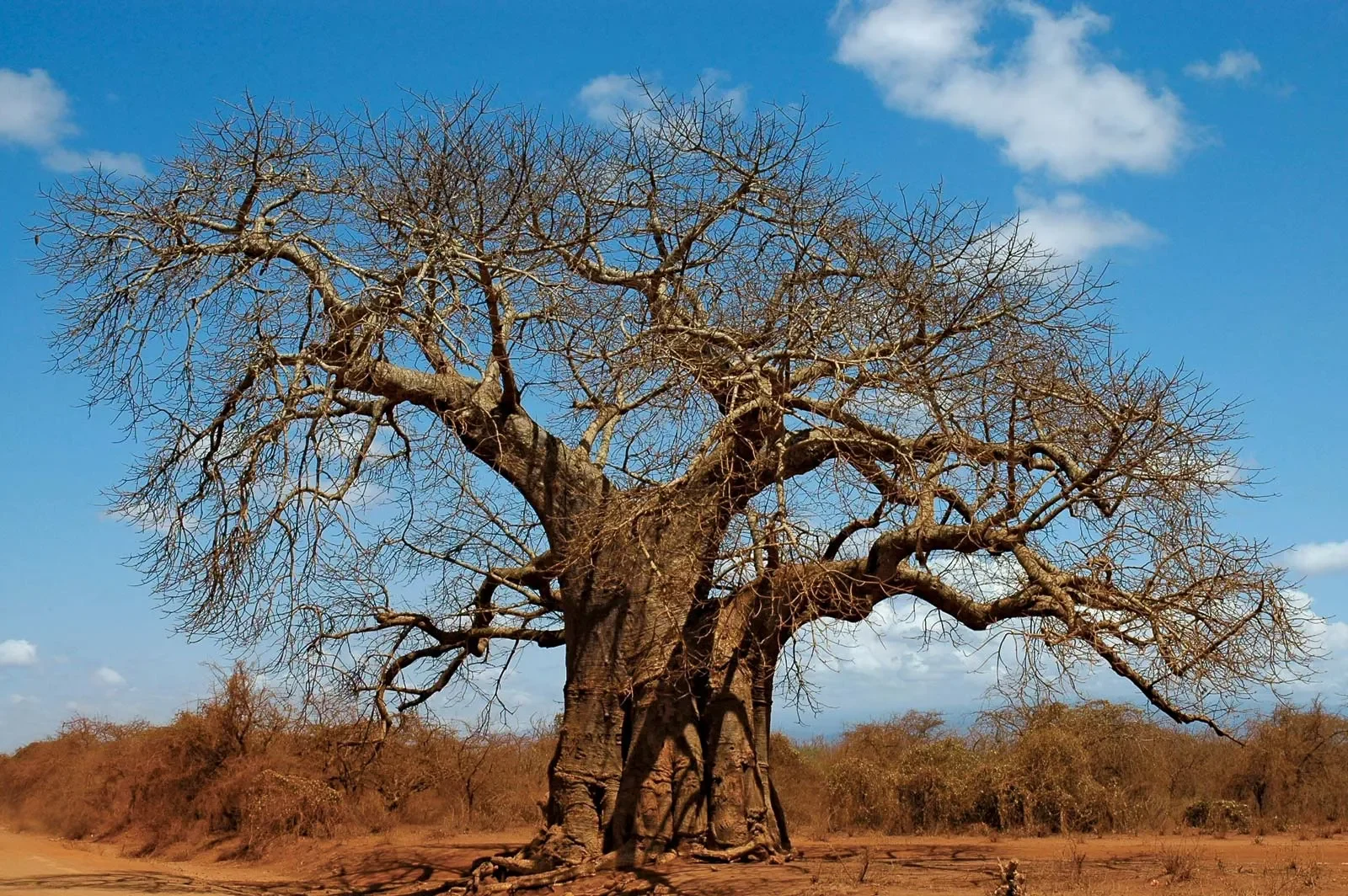
Madagascar is home to perhaps the most whimsical and romantic pair of Baobab trees: the Baobab Amoureux.
According to myth, a man and a woman from nearby villages fell in love and vowed and prayed to be together in eternity.
God granted them their wish, and the two baobabs were born, intertwined and in love, as the couple always dreamed.


an ascetic meditating
turned upside down
the Baobab tree
Despite it’s mighty appearance, the baobab is a most kindly giant, and one moreover, quite free of thorns, inviting a being that stays true regardless of passing undercurrents.
moving image of baobab
The tree’s profound presence instills a deep sense of awareness and tranquility.
By fostering a sense of identification with the Adansonia Digitata, one can root into the deep internal strengths and coping mechanisms, and learn to rely on internal resources in changing external circumstances.
Guided Meditation audio
Spending time in nature, under and around trees, we are often in awe in with’ness of their beauty. becoming aware of ourown inner being and its stirrings, while remaining true to an ever-present consciousness.
 Built with Shorthand